CN / EN

  • Our quality policy

    First-class products, customer satisfaction, full participation, continuous improvement

    Excellent products are refined through verification. Verification is ongoing, production lines are constantly being standardized, and quality issues are continuously being improved.
  • Employee functional philosophy

    Diligent, bold in thinking, and treat the factory as home

    For every employee, the company's goal is to ensure the best interests of each employee, and employees also give their utmost to the company, thinking of the company wholeheartedly!

    The relationship between enterprises and employees is mutual. Employees are the core strength of the enterprise, managers serve as the bridge and link between the upper and lower levels of the enterprise, and leaders are the decision-makers and the implementers who ultimately ensure the successful execution of core strengths through the transmission link!

  • market concept

    Maintain our existing market and expand internationally
    Only off-season mentality, no off-season market
    Only weak minds, not weak markets
    Our company has always harbored the idea of expanding overseas! We aim to break through our existing domestic foundation and seek higher ground in the international market!
    For the domestic market, our company's mission has always been to steadily advance and strive for excellence! We have always adhered to the philosophy that "it is not easy to gain a customer, but it is easy to lose one", and have secured a foothold in the industry!
    The current market position of our enterprise primarily relies on various marketing strategies. Marketing, as the term is commonly used, serves not only as an organizational function but also as a process of creating and disseminating customer value and managing customer relationships for the benefit of the enterprise itself. It primarily encompasses four stages: the start-up phase, the application phase, the formation and development period, and the maturity phase.
    The current market is changing rapidly and developing swiftly. Integrating with international practices can better reflect the recognition and support our enterprise receives in terms of management!
  • competitive concept

    The "compare three before buying" method: As long as we compare, try, touch, and look at our products with those of our competitors, and as long as our products maintain a higher level than our competitors', we can grasp the initiative in the market.
  • Our Minghe spirit

    The core of respecting and loving one's job lies in being rooted in one's position and loyal to one's duties. This embodies the traditional Chinese concept of "loyalty". We, Minghe people, should take pride in our work, treat it with sincerity from the bottom of our hearts, remain faithful and unwavering, and regard the factory as our home!
    The core idea of continuous innovation is transcendence. Continuous innovation embodies the spirit of Minghe people, who never become complacent, actively strive for progress, and perpetually seek novelty.
    Two sentences that embody the spirit of Minghe:
     • With determination, nothing is impossible;
     • Persistently do what others consider to be very simple.
  • 80/20 principle

    The key minority restricts the secondary majority. Because managers are in the minority, but they are key; employees are in the majority, but from a management perspective, they are in a subordinate position. That is to say, the key minority restricts the secondary majority.
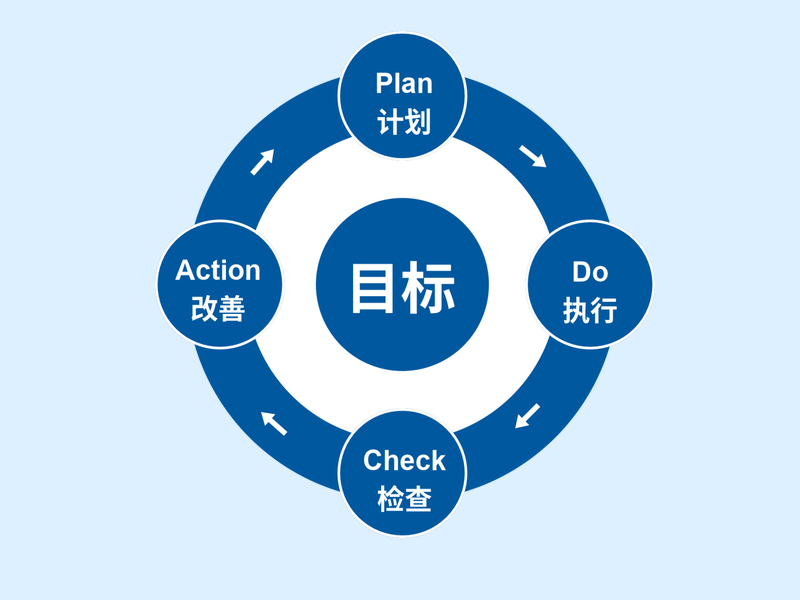
  • PDCA

    P - PLAN (Plan) D - DO (Implement)
    C - CHECK   A - ACTION
    Phase P: Based on user requirements and with the goal of achieving optimal economic benefits, through investigation, design, and trial production, formulate technical and economic indicators, quality objectives, management projects, as well as specific measures and methods to achieve these goals.
    Stage D: Implement the formulated plans and measures.
    Phase C: After implementing one phase, check the execution status and effectiveness against the plan and objectives, and identify problems in a timely manner.
    Phase A: Based on the inspection results, take corresponding measures, either revise and improve the original plan or seek new goals and formulate new plans.
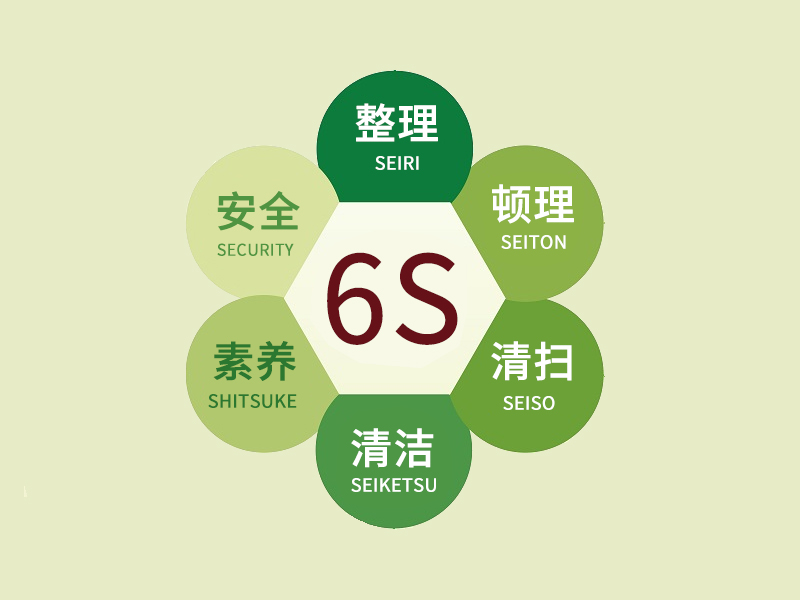
  • 6S management

    "6S management" - originating from Japan's 5S, is a unique management model of Japanese enterprises, and is hailed as one of the two magic weapons for Japan's economic take-off.  
    SEIRI - distinguish between necessary and unnecessary items, keep one and discard the other
    SEITON - Scientific layout, quick access
    Sweeping (SEISO) - Beautify the environment, make it ready for use
    Cleanliness (SEIKETSU) - Establish a system and implement it thoroughly
    SHITSUKE - Adhering to Systems and Developing Habits
    SAFETY - Safe operation, life comes first
  • 6 The relationship between S

    ◆ If there is only organization without rectification, it will be really hard to find items;
    ◆ Only rectification without organization leads to chaos and confusion, making it impossible to make choices and decisions;
    ◆ Without tidying and cleaning, the use of items is unreliable;
    ◆ How to ensure the 3S effect? Let me share a trick for cleaning;
    ◆ Standard operation cultivates professionalism, and safe production is of utmost importance;
    ◆ Accumulate day by day and improve diligently, the company's management level is high
  • 6S is the foundation for other management activities

    (1) It is the premise of TPM
    (2) It is the first step of TQM
    (3) It is a shortcut to ISO9000
    (4) It is a prerequisite for the implementation of JIT and IE